Biology 2201
Course Description
This course begins the study of introductory biology. Topics include the cell and cellular transport, diversity of life, homeostasis of human biology systems and population biology.
Authorized Learning Resource
Homework Central
Thurs June 11: This period was used as a review session in preparation for our upcoming final exam.
Wed June 10: This period was used as a review session in preparation for our upcoming final exam.
Tues June 9: This period was used as a review session in preparation for our upcoming final exam.
Thurs June 4: Please review our continued notes and discussion of the Topic A - The Digestive Pathway: (2) esophagus (bolus), (3) stomach (chyme), (4) small intestine (duodenum, jejunum and ileum). Note that most absorption of food takes place in the small intestine and this is facilitated by a large surface area.....to be continued.
Tues June 2: Please review our introduction to Unit 3 (E) - The Digestive System. We begin with Topic A - The Digestive Pathway. Be familiar with the purpose of the digestive system (macromolecule breakdown into absorbable micro molecules). Note 2 types of digestion: (1) mechanical digestion and (2) chemical digestion. Be familiar with how mechanical digestion aids in chemical digestion. Review the digestive pathway and be able to identify these structures on a diagram: (1) mouth including teeth, tongue and salivary glands (bolus), (2) esophagus (bolus)...to be continued.
Mon June 1: Students wrote Unit 3D - Respiratory System Test.
Fri May 29: This period was used as a review class in preparation for the upcoming Respiratory System Test.
Respiratory System Test (Mon, June 1st)
Wed May 27: Please review our continued notes and discussion of Topic C - The Mechanics of Breathing. Review the definitions of the following respiratory volumes and be able to identify and calculate these from a spirograph from a spirometer: (4) vital capacity (VC) and (5) residual volume (RV). Students worked on Lab 1 - Spirometry and we demonstrated use of a spirometer..to be continued. Students began work on the respiratory question assignment
Lab - Spirometry (Due Thurs)
Assign1 - Respiratory Questions (Due Thurs)
Respiratory System Test (Mon, June 1st)
Tues May 26: Please review our continued notes and discussion of Topic C - The Mechanics of Breathing. Review the definitions of the following respiratory volumes and be able to identify and calculate these from a spirograph from a spirometer: (1) tidal volume (TV), (2) inspiratory reserve volume (IRV), (3) expiratory reserve volume (ERV)..to be continued.
Respiratory System Test - Mon, June 1st
Fri May 22: Please review our continued notes and discussion of Topic B - Respiratory Pathway. Be able to label a diagram identifying these structures: (7) bronchioles (8) lungs and (9) alveoli. Be familiar with the exchange of oxygen and carbon dioxide between the alveoli and the capillary. Also review our introduction to Topic C - The Mechanics of Breathing. Note the 2 structures that control pressure inside the lungs and allow for breathing: (a) diaphragm and (b) intercostal muscles. Note the changes in volume and internal pressure that allow for breathing: (a) inspiration (inhalation) and (b) expiration (exhalation). Be able to interpret breathing diagrams ...to be continued.
Respiratory System Test - Mon, June 1st
Thurs May 21: Please review our continued notes and discussion of Topic B - Respiratory Pathway. Be able to label a diagram identifying these structures: (1) nasal cavity (nose & mouth). Be familiar with how the nasal cavity makes changes to the air before entering the lungs. (2) pharynx (throat), (3) epiglottis, (4) larynx (voice box), (5) trachea (windpipe), (6) bronchi, (7) bronchiole...to be continued.
Wed May 20: Please review our introduction to Unit 3 (D) - Respiratory System. We started with Topic A - Respiratory System Purpose and Requirements. Note the purpose of gas exchange. Also review the following requirements and how they are met: (1) moist surfaces (moist alveoli), (2) large surface area (folding of alveoli), (3) high concentration gradient (high O2 in alveoli) and (4) short diffusion path (alveoli and capillary are 1 cell thick). Also review the difference between the terms breathing, gas exchange and cellular respiration.
Thurs May 14: This period was used to complete the Circulatory System Test.
Tues May 12: Please review our continued notes and discussion of Topic G - Components of Blood: Note the components of blood, their percentage of blood volume: (4) plasma. Also review the blood clotting process including the chemical changes, formation of the platelet plug and the fibrin mesh. The remainder of the period was used for review.
Circulatory System Test - Thurs, May 14th
Mon May 11: Please review our notes and discussion of Topic G - Components of Blood. Note the components of blood, their percentage of blood volume, function, shape, size and where these components (cells) are produced in the body: (1) red blood cells (erythrocytes), (2) white blood cells (leucocytes) and (3) platelets (thrombocytes)...to be continued.
Assign 1- Circulatory System Questions (Due Tues) Circulatory System Test - Thurs, May 14th
Fri May 8: Students completed Lab 2 - Effect of Exercise on Blood Pressure.
Lab 2 - Effect of Exercise On Blood Pressure (Due Mon)
Circulatory System Test - Thurs, May 14th
Wed May 6: Please review our notes and discussion of Topic F - Blood Pressure. Note the definition of blood pressure, which blood vessels have the highest pressure, how pressure is generated and the measurement in mm Hg as systolic pressure / diastolic pressure. Note how blood pressure is measured in the brachial artery with a sphygmomanometer and the sounds the physician is hearing. Note how blood pressure can be used as a measurement of cardiovascular health. Students completed a pre-lab for Lab 2 - Blood Pressure.
Circulatory System Test - Thurs, May 14th
Tues May 5: Please review our introduction to Topic E - Heartbeat. Note how heart beat is generated through the SA node; the body's pacemaker (causes contraction of the atria) and the AV node (causes contraction of the ventricles). Be familiar with how the electrical activity of the heart can be measured with an ECG (electrocardiogram) and be able to identify contractions of atria and ventricles on the ECG. Also review the sounds made by the beating heart and their cause: (1) "lub" caused by the closing of the tricuspid and bicuspid valves and (2) "dub" caused by the closing of both semilunar valves. We used a formula to calculate cardiac output. Also review our notes and discussion of Topic F - Blood Pressure. Note the definition of blood pressure, which blood vessels have the highest pressure...to be continued.
Fri May 1: Students completed the Sheep Heart Dissection and the accompanying Lab Report.
Sheep Heart Dissection Lab Report - Due Fri
Thurs Apr 30: Please review our continued notes and discussion of Topic D - The Heart. Be able to identify ALL valves. Also review the various circulation loops: (1) pulmonary (lungs), (2) systemic (body), (3) cardiac (heart), (4) renal (kidneys). Students watched a video as a pre-lab for the sheep heart dissection.
Wed Apr 29: Please review our continued notes and discussion of Topic C - Capillaries. Note heat exchange at the capillary: Situation 2 - too cold resulting in vasoconstriction and return of blood via a deep vein. Please review our introduction to Topic D - The Heart. Be familiar with its location, size, composition and structure. Note 2 atria and 2 ventricles, the septum and why the heart is called a double pump. We traced the flow through the heart identifying all anatomy. Be able to label a diagram. Right Side (Deoxy Blood) - superior/inferior vena cava, right atrium, right ventricle, pulmonary arteries. Left Side (Oxy Blood) -pulmonary veins, left atrium, left ventricle and aorta. Note what chamber has the thickest walls...to be continued.
Fri Apr 24: Please review Topic C - Capillaries. Note that these tiny blood vessels are the site of exchange of nutrients and waste between the blood and the cells. Be familiar with events at the (a) artery end of the capillary (downloading of oxygen to the cells from the blood) and at (b) vein end of the capillary (uploading of waste from the cells to the blood for excretion). Also review heat exchange at the capillary: Situation1 - too warm resulting in vasodilation and return of blood via a surface vein....to be continued.
Wed Apr 22: Students completed the Endocrine System Test.
Tues Apr 21: Please review our introduction to Topics B - Blood Vessel Types. Note the role of three types of blood vessels and be able to recognize them from a diagram based on their structure: (1) arteries, (2) veins and (3) capillaries. Also review Topic C - Capillaries. Note that these tiny blood vessels are the site of exchange of nutrients and waste between the blood and the cells. ...to be continued.
Mon Apr 20: Please review our introduction to Unit 3C - The Circulatory System. We introduced Topic A - Functions of a Circulatory System. Be familiar with all functions of the system. Note that (a) thin organisms do not require a circulatory system as cells remain close to the environment and therefore transport by diffusion is used. (b) Thick organisms require a transport system because cells can be distant from the environment. The circulatory system is also called the cardiovascular system. Also review our introduction to Topics B - Blood Vessel Types. Note the role of three types of blood vessels and be able to recognize them from a diagram based on their structure: (1) arteries...to be continued.
Endocrine System Test - Wed, April 22nd
Thurs Apr 16: This class was used as a review period in preparation for the upcoming test.
Endocrine System Test - Wed, April 22nd
Wed Apr 15: Students used this class to complete Assign 3 - "Glands and Hormones Question Assignment". Students selected research topics for Assign 4 - Endocrine System Disorders.
Assign - Gland Hormone Questions - Due Today
Assign - Endocrine System Research - Due Mon
Endocrine System Test - Wed, April 22nd
Mon Apr 13: Please review our continued notes and discussion of Topic C: Glands and Hormones: (5) Pancreas. Note the symptoms of untreated diabetes and the discovers of insulin; Canadians Banting and Best. (6) Pineal Gland and its hormone (a) melatonin. Be familiar with its function with respect to sleep, the circadian rhythm followed and applications such as jetlag, shift work and cell phones. (7) Gonads (Testes and Ovaries) and their hormones; androgens (testosterone) and estrogen and their function in regulating the secondary sex characteristics.
Assign 2 - Gland Hormone Summary Table (Due Wed) Endocrine System Test - Wed Apr 22
Thurs Apr 2: Please review our continued notes and discussion of Topic C: Glands and Hormones: (4) Adrenal Cortex (outer layer) and its hormones (c) androgens and estrogens. The adrenal gland produces small amounts of these sex hormones. (5) Pancreas. Be familiar with the Islet of Langerhans Cells that produce 2 hormones: (a) alpha cells producing glucagon and (b) beta cells secreting insulin. Note how homeostasis of blood glucose is maintained in the following situations: (a) situation 1 - after a meal (release of insulin from beta cells, note the conversions in muscle, liver and fat cells) and (b) situation 2 - before a meal (release of glucagon from alpha cells, note the conversions in muscle, liver and fat cells). Be familiar with the 3 "g" words - glucose, glycogen and glucagon...to be continued.
Mon Mar 30: Please review our continued notes and discussion of Topic C: Glands and Hormones: (4) Adrenal Medulla (middle layer) and its hormones (a) adrenaline / epinephrine and (b) noradrenaline / norepinephrine. These hormones are complimentary and are involved in the short-term stress response / fight or flight. (4) Adrenal Cortex (outer layer) and its hormones (a) glucocorticoids / cortisol which is a long-term stress hormone producing energy throughout the day along with anti-inflammatory properties. (b) mineral corticoids / aldosterone which raises sodium in the blood and blood pressure....to be continued.
Fri Mar 27: Please review our continued notes and discussion of Topic C: Glands and Hormones: (2) Thyroid Gland (location: neck): (a) thyroxine / T4. Be familiar with how thyroxine is regulated through a negative feedback loop. (b) calcitonin - lowers blood calcium. (3) Parathyroid Gland: (a) parathyroid hormone / PTH. Discuss how homeostasis is maintained when (a) blood calcium is too low (PTH secretion) and (b) blood calcium is too high (calcitonin secretion).
Update Gland / Hormone Summary Table
Wed Mar 25: Please review our continued notes and discussion of Topic C: Glands and Hormones: (1) Anterior Pituitary Gland (location: brain; below hypothalamus: (a) human growth hormone (hGH) / somatotropin - growth of bones, growth of muscle, mineralization of bones by increasing calcium absorption. Be familiar with how this hormone follows a circadian rhythm...to be continued. (2) Thyroid Gland (location: neck): (a) thyroxine / T4 - controls metabolic rate and body temperature.....to be continued.
Mon Mar 23: Please review our notes and discussion of Topic B - Hormone Types. Note how the following hormones function (mechanism): (1) steroid hormones - fat soluble and can enter the cell and (b) protein hormones - fat insoluble and cannot enter the cell / rely on a second messenger. Also review our introduction to Topic C: Glands and Hormones. For each gland note the hormone that is secreted, the target cells and its function within the body: (1) Anterior Pituitary Gland (location: brain; below hypothalamus: ...to be continued.
Assign 1 - Target Cells & Hormone Types (Due Tues)
Thurs Mar 19: Please review our introduction to Unit 3B - Endocrine System. We started with Topic A - Endocrine Introduction. Please review the definitions of endocrine system, hormones and endocrine vs exocrine glands. Also review the concept of target cells for hormones. Note the differences and similarities between the endocrine and nervous systems. Be aware of the physical connection between the two systems; the hypothalamus-pituitary gland connection in the brain...to be continued.
Wed Mar 18: This period was used to Complete Unit 3A - Nervous System Test.
Wed Mar 11: Please review our continued notes and discussion of Topic F: The Synapse. Be able to identify the following neurotransmitters and whether they are excitatory or inhibitory in the CNS or PNS: (4) serotonin and (5) endorphins. This period was used for review in preparation for the upcoming Nervous System Test.
Nervous System Test - Wed, March 18th
Fri Mar 6: Please review our continued notes and discussion of Topic F: The Synapse. Note the steps involved in allowing an impulse to cross a synapse and be able to label a related diagram. Note what happens to neurotransmitters once their job in the synapse is complete. Be able to identify the following neurotransmitters and whether they are excitatory or inhibitory in the CNS or PNS: (1) acetylcholine, (2) noradrenaline, (3) dopamine...to be continued.
Assign 3 - Neuron Function (Due Mon)
Nervous System Test - Wed, March 18th
Tues Mar 3: We completed a summary table for Topic E: Impulse Transmission. Please review our introduction to Topic F: The Synapse. Be familiar with the definition of a synapse, a pre-synaptic neuron and a post-synaptic neuron. Note the steps involved in allowing an impulse to cross a synapse and be able to label a related diagram...to be continued.
Assign 2 - Nervous System Research (Due Wed)
Thurs Feb 26: Please review our continued notes and discussion of Topic E - Impulse Transmission. Be familiar with the 3 stages of impulse transmission and be able to recognize these on a graph of potential energy: (2) depolarized (neuron firing, action potential). and (3) repolarized (refractory period). Note how the strength of a response is determined despite the All or None Response. Students selected topics for Assign 2 - Nervous System Research.
Assign 2 - Nervous System Research (Due Wed)
Fri Feb 20: Please review our introduction to Topic E - Impulse Transmission. Be familiar with the 3 stages of impulse transmission and be able to recognize these on a graph of potential energy: (1) polarized (neuron at rest, resting potential), (2) depolarized (neuron firing, action potential). Be familiar with the concept of threshold and the "all or none" response...to be continued.
Mon Feb 16: Please review our continued discussion of Topic D - Reflex and Reflex Arc. Note the reflex is automatic and does not directly involve the brain. This creates a rapid response to provide survival vale (minimize contact with dangerous stimuli). Students completed Lab 2 - The Reflex.
Lab 2 - The Reflex (Updated: Due Fri)
Fri Feb 13: Please review our notes and discussion of Topic C - The Neuron. Be able to label a diagram and provide the function of the following neuron parts: (7) axon terminal. Also review our introduction to Topic D - Reflex and Reflex Arc. Note the definition of the reflex arc / pathway. Note the parts of a reflex arc and be able to label a diagram: (1) stimulus, (2) sensory receptor, (3) sensory neuron, (4) interneuron, (5) spinal cord, (6) motor neuron, (7) effector and (8) response. Note the reflex is automatic and does not directly involve the brain. This creates a rapid response to provide survival vale (minimize contact with dangerous stimuli)...to be continued.
Wed Feb 11: Please review our notes and discussion of Topic C - The Neuron. Note the definition of a neuron. Be able to label a diagram and provide the function of the following neuron parts: (1) cell body, (2) dendrite, (3) axon, (4) myelin sheath, (5) Schwann cell, (6) node of Ranvier...to be continued.
Tues Feb 10: Students completed the Sheep Brain Dissection Lab.
Lab Due - Wed
Mon Feb 9: Please review our continued notes and discussion of (2) Peripheral Nervous System (PNS). Note its 2 branches (a) autonomic nervous system providing autonomic / involuntary control of internal glands and organs. Include its branches i) sympathetic nervous system moving the body away from homeostasis - "fight or flight" and the ii) parasympathetic nervous system moving the body toward homeostasis - "rest and digest". (b) somatic nervous system providing voluntary control of skeletal muscles. Students watched a video to prepare for the Sheep Brain Dissection Lab...to be continued.
Assign 1 - Due Wed
Thurs Feb 5: Midterm Exams were returned for review. Please
review our continued discussion of Topic B - Organization / Anatomy of the Nervous System: (1) CNS (b) Brain - Hindbrain (v) cerebellum (vi) medulla oblongata and (vii) pons. Also review (2) Peripheral Nervous System (PNS). ...to be continued.
Assign 1 - Due Mon
Thurs Jan 22: This class was used as review period 1 in preparation for the upcoming Midterm Exam.
Midterm Exam - Mon Jan 26th (12:40 - 1:55) Room: 137
Wed Jan 21: This class was used as review period 1 in preparation for the upcoming Midterm Exam.
Midterm Exam - Mon Jan 26th (12:40 - 1:55) Room: 137
Tues Jan 20: This class was used as review period 1 in preparation for the upcoming Midterm Exam. We focused on a review of Unit 1 - Ecosystem Interactions and Population Dynamics.
Midterm Exam - Mon Jan 26th (12:40 - 1:55) Room: 137
Fri Jan 16: Please review our introduction to Topic B - Organization / Anatomy of the Nervous System: (1) CNS (b) Brain - Forebrain: (i) cerebrum, (ii) thalamus, (iii) hypothalamus. Midbrain (iv) midbrain. Hindbrain (v) cerebellum...to be continued.
Thurs Jan 15: Students wrote the Unit 2 Test - Processes That Sustain Life (The Cell).
Tues Jan 13: Please review our introduction to Topic B - Organization / Anatomy of the Nervous System. Note the 2 major divisions of the nervous system: (1) Central Nervous System (CNS) consisting of grey matter and white matter. Be familiar with the 2 divisions of the CNS: (a) spinal cord and (b) brain. See how the brain is protected through the skull, meninges and cerebrospinal fluid. Note the parts of the brain and their functions and be able to label these of a diagram. Forebrain (i) cerebrum including cerebral cortex and corpus callosum...to be continued.
Unit 2 Test: Thurs Jan 15th
Mon Jan 12: Please review our introduction to Unit 3 - Homeostasis / Human Body Systems. We begin with a study of the Human Nervous System. Review our notes and discussion of Topic A - Homeostasis of Body Systems. Be familiar with the definition of homeostasis and examples of how homeostasis is achieved (ex: body temp, blood pressure). Be familiar with 2 feedback loops involving homeostasis: (1) negative feedback loop which moves the body toward homeostasis...associated with a healthy body and (2) a positive feedback loop which moves the body away from homeostasis...associated with disease or a changing body. We continued with further review for the Unit 2 Test.
Unit 2 Test: Thurs Jan 15th
Fri Jan 9: This period was used for review in preparation for the unit test.
Unit 2 Test: Thurs Jan 15th
Wed Jan 7: This period was used for review in preparation for the unit test.
Unit 2 Test: Thurs Jan 15th
Tues Jan 6: Please review our continued notes and discussion of Topic J - Biological Molecules In Cells. (3) Macromolecules / Polymers (b) Lipids / Fats. Note their function in the body. i) triglycerides including saturated, unsaturated, polyunsaturated and trans fats. ii) phospholipids, iii) steroids and iv) waxes. (c) Proteins. Be familiar with their building blocks (amino acids), the nine essential amino acids and the function of this molecule in the body. The reminder of this period was used for review in preparation for the unit test.
Unit 2 Test: Thurs Jan 15th
Thurs Dec 18: Please review our continued notes and discussion of Topic J - Biological Molecules In Cells. (3) Macromolecules / Polymers (a) carbohydrates. Note their definition, food source and function. These include i) simple carbs (glucose - monosaccharide and sucrose - disaccharide), ii) complex carbs (glycogen & starch for energy storage and chitin & cellulose for structural support). (b) Lipids / Fats. Note their function in the body. i) triglycerides including saturated, unsaturated, polyunsaturated and trans fats. ii) phospholipids...to be continued.
Wed Dec 17: Please review our continued notes and discussion of Topic I - Energy in Cells: (2) Anabolism - (2) Anabolism - stores energy, bond forming, occurs in the chloroplast on the thylakoid membrane. Note the (a) light dependent reaction and the (b) Calvin Cycle. Also review our introduction to Topic J - Biological Molecules In Cells. We defined biochemistry and examined the hierarchy from cells ---> organelles ---> molecules. We defined (1) Elements in Cells and examined the 4 common elements in cells: carbon, hydrogen, nitrogen and oxygen. We examined Molecules in Cells starting with (2) water. Note the attraction of nutrients dissolved in water (polar) to the polar phosphate head of the cell membrane bilayer and other functions such as temperature regulation and providing the aqueous environment for chemical reactions in the cell. (3) Macromolecules / Polymers (a) ...to be continued.
Mon Dec 15: Please review our continued notes and discussion of Topic I - Energy in Cells: (1) Catabolism. Note the 2 catabolic reactions (a) ATP Catabolism. Be familiar with the hydrolysis reaction and the breakdown of ATP; the cell's main energy currency. (b) glucose catabolism through aerobic cellular respiration. Note that the energy produced through glucose breakdown is used to restore ATP in the ATP-ADP Cycle. Note the 4 steps to glucose catabolism (i) glycolysis, (ii) conversion, (iii) Krebs Cycle and (iv) oxidative phosphorylation. (2) Anabolism - stores energy, bond forming, occurs in the chloroplast on the thylakoid membrane...to be continued.
Fri Dec 12: Please review our continued notes and discussion of Topic H - Limits To Cell Size. Be familiar with the reasons for why it is an advantage for a cell to stay small: (2) control by the nucleus, (3) collision of reactants and (4) surface area to volume ratio. We included calculations to explain how small cells have an advantage for feeding. Also review our introduction to Topic I - Energy in Cells. Be familiar with the term metabolism and 2 types of metabolism: (1) catabolism - releases energy, bond breaking, occurs in the mitochondria on the cristae...to be continued.
Assign 4 - Surface Area To Volume Ratio (Due Mon)
Wed Dec 10: Please review our introduction to (2) Active Transport / Membrane Assisted Transport: (a) endocytosis - (ii) phagocytosis (cell eating, conducted by white blood cells to destroy bacteria) and (b) exocytosis. We completed a summary table / flow chart for cell transport. Also review our introduction to Topic H - Limits To Cell Size. Be familiar with the reasons for why it is an advantage for a cell to stay small: (1) limits to diffusion...to be continued.
Assign 3 - Transport (Due Thurs)
Tues Dec 9: Please review our continued notes and discussion of Topic G - Cell Transport. (1) Passive Transport (c) facilitated diffusion. Note its use for molecules that are (i) too large (carrier proteins) and molecules that are (ii) too charged (channel proteins). Also review our introduction to (2) Active Transport / Membrane Assisted Transport. Note that active transport requires the use of ATP (cell energy), vesicles and works against a concentration gradient. Be familiar with 2 types: (a) endocytosis - including (i) pinocytosis (cell drinking, conducted by all cells all of the time to take in nutrients)...to be continued.
Lab 2 - Osmosis (Due Wed)
Mon Dec 8: We discussed several osmosis application questions. Students gathered data for Lab 2 - Osmosis "The Great Potato Experiment"...to be continued.
Thurs Dec 4: Students completed Unit 2 - Quiz 3 "Organelles". Please review our continued notes and discussion of (1) Passive Transport (b) osmosis. If the cell is in a hypertonic solution note the terms crenate (animal cell) and plasmolyzed (plant cell)...to be continued.
Mon Dec 1: Please review our continued notes and discussion of Topic G - Cell Transport. (1) Passive Transport - (a) diffusion. Note that diffusion involves movement of solute from high concentration to low concentration and how this occurs through Brownian Motion until a dynamic equilibrium is established. Diffusion works for small molecules that are uncharged over short distances and large concentration gradients ex: oxygen or carbon dioxide. (b) osmosis. Be familiar with the terms hypotonic, hypertonic and isotonic. Note that osmosis is the movement of solvent (water) across the cell membrane from a hypotonic solution to a hypertonic solution. If the cell is in a hypotonic solution note the terms lyse (animal cell) and turgid (plant cell)...to be continued.
Microscopes and Organelles Quiz 3 - Wednesday
Fri Nov 28: review our introduction to Topic F - Cell Membrane Structure. Be familiar with the phospholipid bilayer and the function of each of its parts: (a) polar phosphate "heads", (b) fatty acid "tails", (c) membrane proteins, (d) cholesterol and (e) carbohydrates. Be able to label a diagram. Review the fluid mosaic model of the membrane noting (a) how it is a mosaic and (b) how it is fluid. Also review our introduction to Topic G - Cell Transport. (1) Passive Transport - without the use of energy. (a) diffusion. Note that diffusion involves movement of solute from high concentration to low concentration and how this occurs through Brownian Motion until a dynamic equilibrium is established...to be continued.
Microscopes and Organelles Quiz 3 - Wednesday
Thurs Nov 27: Please review our continued notes and discussion of Topic E - Eukaryotic Plant Cells: (2) central vacuole and (3) chloroplast (thylakoid membrane). Also review our introduction to Topic F - Cell Membrane Structure. Note that the membrane is selectively permeable and will allow entry of particles based on (a) size and (2) charge. Be familiar with the phospholipid bilayer and the function of each of its parts: (a) polar phosphate "heads"...to be continued.
Assign 2 - Organelles (Due Fri)
Microscopes and Organelles Quiz 3 - Wednesday
Tues Nov 25: Please review our continued notes and discussion of Topic D - Eukaryotic Animal Cells: (10) cytoplasm, (11) cytoskeleton, (12) cilia / flagella. Also review Topic E - Eukaryotic Plant Cells. We labelled the plant cell diagram. Note the additional organelles in plant cells and their function: (1) cell wall...to be continued.
Mon Nov 24: Please review our continued notes and discussion of Topic D - Eukaryotic Animal Cells. Be familiar with the function of the following organelles and be able to label a diagram (3) ribosomes, (4) endoplasmic reticulum (both smooth ER and rough ER), (5) Golgi apparatus and the endomembrane system, (6) mitochondria (cristae), (7) lysosomes, (8) transport vesicle, (9) vacuole...to be continued.
Wed Nov 19: Please review our continued notes and discussion of Topic D - Eukaryotic Animal Cells. Be familiar with the function of the following organelles and be able to label a diagram (3) ribosomes, (4) endoplasmic reticulum (both smooth ER and rough ER), (5) Golgi apparatus and the endomembrane system...to be continued.
Tues Nov 18: Students completed Quiz #2 - Compound Light Microscope. Please review our introduction to Topic C - Prokaryotic vs Eukaryotic Cells. Note the differences between these 2 types of cells based on the following headings: (5) DNA, (6) number of cells in organism and (7) metabolism (aerobic or anaerobic) organism. Also review our introduction to Topic D - Eukaryotic Animal Cells. Be familiar with the function of the following organelles and be able to label a diagram: (1) nucleus, (2) nucleolus, ...to be continued.
Assign 1 - Prokaryotic vs Eukaryotic Cells (Due Wed)
Fri Nov 14: Students completed work with Lab 1 - The Compound Light Microscope. Please review our introduction to Topic C - Prokaryotic vs Eukaryotic Cells. Note the differences between these 2 types of cells based on the following headings: (1) kingdoms of life, (2) nucleus present or absent, (3) structure and size, (4) organelles present or absent...to be continued.
Quiz 2 (Microscope Parts and Functions) - Tues, Nov 18th
Microscope Lab (Due Tues)
Thurs Nov 13: We discussed the guidelines for making biological drawings. Students started Lab 1 - The Compound Light Microscope. Students prepared wet mounts of onion cells, stained them with iodine estimated their biological size and prepared a biological drawing....to be continued.
Quiz 2 (Microscope Parts and Functions) - Tues, Nov 18th
Fri Nov 7: Please review our continued notes and discussion of Topic B - Microscope Development. Review the types of microscopes and their applications: (2) transmission electron microscope - TEM, (3) dissection or stereomicroscope and (4) scanning electron microscope - SEM...to be continued. Students completed a worksheet exploring similarities and differences between the various types of microscopes.
Quiz 2 (Microscope Parts and Functions) - Tues, Nov 18th
Thurs Nov 6: Students wrote Unit 2 Quiz 1. Please review our continued notes and discussion of Topic B - Microscope Development. Review the types of microscopes and their applications: (1) compound light microscope, (2) transmission electron microscope - TEM...to be continued.
Wed Nov 5: Please review our continued notes and discussion of Topic B - Microscope Development. Be familiar with the following microscope terms: (8) wet mount procedure vs permanent slide and (9) biological size including calculations. Students went to the lab to practice the wet mount procedure and to practice focusing the microscope on a permanent slide.
Quiz 1 Thurs
Mon Nov 3: Please review our continued notes and discussion of Topic B - Microscope Development. Be familiar with the following microscope terms: (3) depth of field, (4) working distance, (5) resolving power (resolution), (6) image inversion, (7) specimen and (8) wet mount procedure vs permanent slide...to be continued.
Lab 4 - Competition (Due Wed)
Quiz 1 Thurs
Fri Oct 31: Please review our continued notes and discussion of Topic B - Microscope Development. Be familiar with parts and functions of a compound light microscope and be able to label a diagram: (f) stage, (g) arm, (h) course adjustment, (i) fine adjustment knob and (j) diaphragm. Also review the following microscope terms: (1) total magnification (include calculations), (2) field of view, (3) depth of field...to be continued.
Quiz 1 Thurs, Nov 6
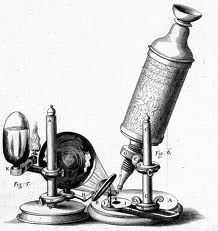
Wed Oct 29: Please review our continued notes and discussion of scientists making contributions toward the Cell Theory: (3) Brown, (4) Schleiden, (5) Schwaan, (6) von Mohl, (7) Perkin and (8) Virchow...to be continued. Please review our notes and discussion of Topic B - Microscope Development. Be familiar with parts and functions of a compound light microscope and be able to label a diagram: (1) ocular lens, (b) objective lens, (c) condenser lens, (d) revolving nosepiece, (e) body tube...to be continued.
Quiz 1 Thurs, Nov 6
Tues Oct 28: Students completed Week 2 observations for Lab 4 - Competition. Please review our continued notes and discussion of Topic A - Cell Theory Development. Note the scientists exploring the origin of cells and what theory was supported by their experiments: (7) Miller / Urey. Also review scientists making contributions toward the Cell Theory. Note the invention of the microscope was an important technology that allowed provided magnification to view cells: (1) Hooke, (2) Leeuwenhoek...to be continued.
Mon Oct 27: Students wrote Unit Test 1 - Ecosystem Interactions and Population Dynamics.
Thurs Oct 23: This class was used as a review period in preparation for the upcoming test.
Wed Oct 22: Please review our continued notes and discussion of Topic A - Cell Theory Development. Note the scientists exploring the origin of cells and what theory was supported by their experiments: (3) Redi, (4) Needham, (5) Spallanzani, (6) Pasteur and (7) Miller / Urey...to be continued.
Unit 1 Test - Mon Oct 27
Mon Oct 20: Students collected Week 1 Data for Lab 4 - Competition. Please review our introduction to Unit 2 - Processes That Sustain Life (The Cell). Review our introduction to Topic A - Cell Theory Development. Be familiar with the 2 theories regarding where the first cell came from (1) spontaneous generation and (2) biogenesis. Note the scientists exploring the origin of cells and what theory was supported by their experiments: (1) Aristotle, (2) van Helmont...to be continued.
Assign 6 - Human Population Growth (Wed)
Unit 1 Test - Mon Oct 27
Fri Oct 17: Please review our continued notes and discussion of Topic G - Human Population Growth. Note the definition of an ecological footprint and the 6 categories that contribute to this footprint. Review the concept of biocapacity and an ecological overshoot. Note the impact of our ecological footprint on (1) 3 categories of biodiversity (a) species diversity, (b) genetic diversity and (c) ecosystem diversity and (2) sustainability.
Assign 6 - Human Population Growth (Mon)
Thurs Oct 16: Please review our continued notes and discussion of Topic G - Human Population Growth. We discussed how to measure human population growth: (3) demographic transition model (Stage 3 demographic transition, Stage 4 post transition, stage 5 negative population growth). (4) population pyramids (a) expansive population, (b) constrictive population and (c) stable population...to be continued.
Unit 1 Test - Mon Oct 27
Tues Oct 14: Please review our introduction to Topic G - Human Population Growth. Note that humans have an extreme k strategy, Type I survivorship curve and a J shaped growth curve. Note the significant changes through human history on the J-shaped curve including early humans, Bubonic Plague and the Industrial Revolution. We discussed how to measure human population growth: (1) percent population growth, (2) doubling time, (3) demographic transition model. Note the various stages of this model (Stage 1 early human populations, Stage 2 the demographic trap...to be continued.
Unit 1 Test - Mon Oct 27
Fri Oct 10: Students completed setup of Lab 4 - "Competition" and developed an appropriate hypothesis.
Assign 5 - Interactions (Due Tues)
Wed Oct 8: Please review our notes and discussion of Topic F - Interactions in Communities: (3) symbiotic interactions (a) mutualism, (b) commensalism and (c) parasitism. (4) Interactions With Non-Native / Invasive Species. Note the definition of invasive and the damage they can cause. Be familiar with methods of (a) chemical control and (b) biological control.
Tues Oct 7: Please review our notes and discussion of Topic F - Interactions in Communities: (1) Competition. Note why organisms compete and the 2 types of competition: (a) intraspecific competition (noting how organisms reduce this competition) and (b) interspecific competition (noting 2 possibilities - coexistence OR competitive exclusion). (2) Predator-Prey Interactions. Note definitions of predator and prey and how these populations tend to cycle...to be continued.
Mon Oct 6: Please review our notes and discussion of Topic E - Changes in Populations. Note 2 types of Limiting Factors (a) density independent limiting factors (abiotic factors). Note the term environmental resistance which is a sum of ALL limiting factors. Also review our discussion of Life Strategies of organisms. Note the definition of life strategies and the factors that determine its reproductive pattern. There are 2 opposite strategies: (1) r Strategy (short life, large number of young, no parental care) and (2) k Strategy (long life, few young and large amounts of parental care). Be familiar with how these strategies can be represented on a Survivorship Curve (r Strategy Type III , k Strategy Type I...to be continued.
Assign 4 - Changes in Populations (Due Tues)
Thurs Oct 2: Please review our notes and discussion of Topic E - Changes in Populations. Note TWO scenarios for population change / growth: (1) population growth in an unlimited environment (not common in nature, does occur in lab setting, J-shaped Curve) (2) population growth in limited environments (common in nature, S-shaped curve). Be familiar with the 3 sections of an S-shaped curve (lag phase, exponential phase and equilibrium phase. Note at equilibrium that the population reaches carrying capacity. Be able to define carrying capacity and indicate this on a graph. Also review our discussion of the Limiting Factor that keep the population below carrying capacity. Note 2 types of Limiting Factors (a) density dependent limiting factors (biotic factors) ...to be continued.
Wed Oct 1: Please review our notes and discussion of Topic E - Changes in Populations. Note the definition of demography, and the formula for calculating a change in population size using the variables births (natality), immigration, deaths (mortality) and emigration. We worked through several sample problems. Note TWO scenarios for population change / growth: (1) population growth in an unlimited environment (not common in nature, does occur in lab setting)...to be continued.
Mon Sept 29: Please review our continued notes and discussion of Topic D - Population Sampling: (3) mark / recapture sampling. Note the definition, conditions when this sampling method is chosen (mobile organisms) and 5 assumptions to maintain accuracy when sampling. We completed a sample calculation.
Lab 3 - Mark Recapture (Due Wed)
Thurs Sept 25: Please review our continued notes and discussion of Topic D - Population Sampling: (2) quadrat sampling. We worked through a sample problem. Students completed Lab 2 - Quadrats.
Lab 2 - Quadrat Sampling (Due Mon)
Tues Sept 23: Students completed Unit 1 Quiz 1. Please review our notes and discussion exploring the differences between (a) precision and (b) accuracy. Note how to increase these when sampling.
Mon Sept 22: Students completed Lab 1 - Line Transects. We also discussed distribution patterns for organisms: (a) clumped distribution, (b) uniform distribution and (c) random distribution...to be continued.
Quiz 1 - Tues
Lab 1 - Line Transects (Due Tues)
Thurs Sept 18: Please review our continued discussion of Topic D - Population Sampling. We discussed (1) transect sampling, when it is used and how it is used to calculate population size...to be continued.
Quiz 1 - Tues
Wed Sept 17: Please review our continued discussion of Topic C - Canadian Biomes. (3) Freshwater Biomes (a) lakes and ponds - standing water (i - littoral zone, ii - limnetic zone and iii - benthic zone) and (b) rivers and streams. Also review our introduction to Topic D - Population Sampling. Be familiar with definitions of population size and population density. Note methods of counting organisms: (a) direct observation, (b) indirect observation (tracks, nests, feces) and (c) sampling. Know why we sample populations , why we take many samples and the definition of a random sample...to be continued.
Assign 3 - Biome Research (Due Thurs)
Quiz 1 - Tues
Tues Sept 16: Please review our continued discussion of Topic C - Canadian Biomes. Note the (1) Terrestrial Biomes of Canada and their temperature, precipitation, indicator plants, indicator animals as well as special features: (c) temperate deciduous forest, (d) grassland. Also review our discussion of (2) Marine Biomes (a) pelagic zone (both i - neritic zone and ii - oceanic zone) and (b) intertidal zone (i - upper intertidal zone, ii - middle intertidal zone and iii - lower intertidal zone)...to be continued.
Assign 3 - Biome Research (Due Thurs)
Fri Sept 12: Please review our introduction to Topic C - Canadian Biomes. Note the definition of a biome and the factors that determine the location of biomes: (a) climate, (b) latitude, (c) altitude and (d) soil. Also be familiar with the factors that determine distribution of organisms within the biome: (a) abiotic factors and (b) range of tolerance. Be able to define an ecotone and include examples. Note the (1) Terrestrial Biomes of Canada and their temperature, precipitation, indicator plants, indicator animals as well as special features: (a) tundra, (b) boreal forest ...to be continued.
Thurs Sept 11: Please review our notes and discussion of Topic B - Energy in Ecosystems. Review the ways that ecologists represent this energy flow: (2) food webs - (high biodiversity, common in nature, stable and (3) pyramids of energy. Note available energy decreases as we move to the top of the pyramid as it is transferred to other forms (Rule of 10). Be able to provide examples of this transfer. Also review our introduction to Topic 3 - Canadian Biomes. Note the definition of a biome and the factors that determine the location of biomes: (a) climate, (b) latitude, (c) altitude and (d) soil. Also be familiar with the factors that determine distribution of organisms within the biome: (a) abiotic factors and (b) range of tolerance ...to be continued.
Assign 2 - Energy Flow (Due Fri)
Tues Sept 9: Please review our notes and discussion of Topic B - Energy in Ecosystems. Be familiar with how energy enters and is stored in the biosphere through (1) photosynthesis and (2) chemosynthesis. Also note how energy is used / released in the biosphere through (1) cellular respiration. Be able to recognize equations for these processes. Note that there is a continual supply of energy from the sun and that it moves in a 1-way flow from sun to Earth. Review the ways that ecologists represent this energy flow: (1) food chains (low biodiversity ecosystems, not common in nature, fragile). Recognize the various producer / consumers as well as the trophic levels...to be continued.
Mon Sept 8: Please review our introduction to Unit 1 - Ecosystem Interactions and Population Dynamics. We started with Topic A - The Biosphere and Hierarchical Levels. Be familiar with definitions of ecology and an ecologist. Note the ordered levels within the biosphere from smallest to largest: (1) individual organism - species including its binomial name, (2) population, (3) community, (4) ecosystem, (5) biome and (6) biosphere.
Assign 1 - Biological Hierarchy (Due Tues)
Fri Sept 5: Welcome to Biology 2201! Let's look forward to a great year of learning together. Today you received your course descriptor and evaluation scheme, had the opportunity to join our Google Classroom and were introduced to my website. The remainder of the period was used to distribute textbooks.